
II-V-I
from The Familiarity

This poem comes from The Familiarity, a manuscript-in-progress about intimacy, repetition, and the long weather of shared life. I wrote it using a II–V–I jazz form, a progression built on preparation, tension, and return. In music, the II chord sets motion in place, the V chord presses toward resolution, and the I chord arrives back at the root—not as an answer, but as inevitability.
In this poem I replaced the chords with verses.
I was interested in how that structure might hold domestic experience the same way: duration without drama, pressure without explanation, and an ending that doesn’t fix anything but still lands. The rain, the news, the body, and the marriage move through that arc, returning not to harmony, but to something familiar.
II.
For twenty-three days straight
it has been raining here in the blue.
It feels like a lifetime.
Not the kind that arrives gently.
Translucent droplets marble your face,
accompanying morning rituals
as cuffs darken
and gravel shines.
This deluge announces itself rambunctiously
drumming the roof in Art Blakey rhythms, without pause,
finding its way through the walls.
I lie awake, counting nothing in particular,
waiting for you to return from the theatre,
the place you say is work
that feels more like home.
I take magnesium and L-theanine,
still my legs refuse rest, paradiddling beneath the sheet
as if they’re practicing a great escape,
though I fear it’s a heist.
Outside, the bruised buddleia leans under its own weight,
ungainly, rooted, syncopated to the earth.
The garden resembles our life:
things collected without plan, placed close together,
hoping proximity might become intention.
White roses mildewing beside whatever survived last winter.
I try not to draw conclusions.
V.
On the news, a man in North Seattle
drove into a flooded road.
Thirty-three.
That detail repeated, as if age alone
might explain it.
They say there were warnings,
signs posted, ignored.
He was discovered in a Honda Civic,
the kind of car people have stopped noticing.
They found him floating inside
and had to prise him from the rusted frame.
The report lingers where it shouldn’t,
on his job, the age of the car, license plates from Wisconsin,
old misdemeanors, a citation from years ago,
a question of why he was in Washington at all.
Small, domestic humiliations.
The rain continues.
I.
At night, the house holds its breath,
drenched in a turbulence that moves from hours
to days
to months.
Yesterday, I said we won’t touch again.
There is calmness in the inevitable.
At forty-eight,
I renounce my sexuality.
I don’t raise my voice.
I don’t need to, anymore.
The rain sings
for me.
I appreciated your poem very much, and I must say it was strange for me because I have been considering submitting a small book of poetry to the press you've just started up (I believe it is you, I'm sorry if I'm mistaken) and the first lyric poem in the book is strikingly similar to the one you've written here, similar in tone, narrative and composition. I enjoy this kind of poem, but I'll be damned if I could structure it as rigorously, or explain my process as clearly, as you have in the intro to this piece.
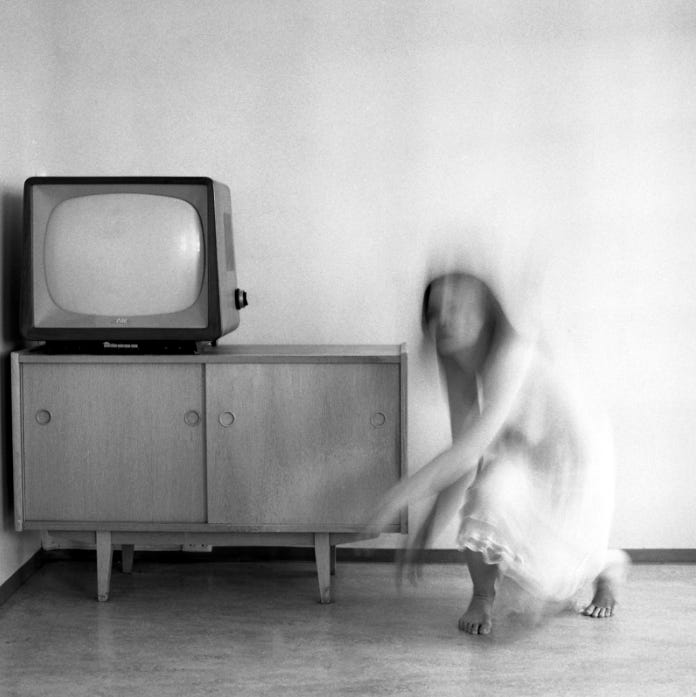
This picture reminds me of the work of the late Japanese artist Taiji Arita, particularly his First Born photography collection. It’s different, yet the memory of Arita’s images resurfaced.