
The Triptych Sonnets
Introducing a new poetry form

Over the past year, I’ve been writing a sequence I call Domestic Sonnets. Poems that place the sonnet’s architecture inside ordinary life: kitchens, bookshelves, ferry crossings, the rituals we all experience inside of relationships.
I’ve never been particularly interested in mastering the sonnet in its traditional sense. The certainty of rhyme, the inevitability of closure, for me, it can feel too resolved for the kind of emotional terrain I’m trying to explore - and I rebel against constraints or structured. My work tends to lean toward something more provisional: moments that hover, that resist conclusion, that remain slightly unfinished.
Out of that tension, this new poetry form began to emerge.
The Triptych Sonnet is a fourteen-line poem composed of three haiku followed by a five-line closing movement in iambic pentameter. The haiku operate as discrete image-fields—compressed, sensory, and often unconnected on the surface. Each one captures a moment in time: memory, dream, observation. Together, they build pressure without explanation.
The final five lines shift register. This is where the poem turns, where reflection, relation, or meaning begins to cohere. In most cases, not as resolution.
If the traditional sonnet is an argument, the Triptych Sonnet is accumulation followed by reckoning.
In many ways, this form feels aligned with the questions I am asking myself in my practice around how memory fragments, how domestic life accrues meaning over time, and how we attempt, often imperfectly, to bind experience into something that resembles coherence.
This is one of the poems in that form.
Domestic Sonnet III - Triptych Sonnet Form
Wolf moon above us.
Tying thread around your wrist—
memory thins out.
Winter nights wrestling
alligators in my sleep.
Coyotes break dawn light.
Ferry horn carries
commuters across gray sound.
A small migration.
Today, I shelved poems along worn wood.
O’Hara leans toward Merwin’s tempered hush.
Gilbert stands near Olds in measured light.
Their spines hold what the night would pull far
and what we tie to keep from drifting apart.
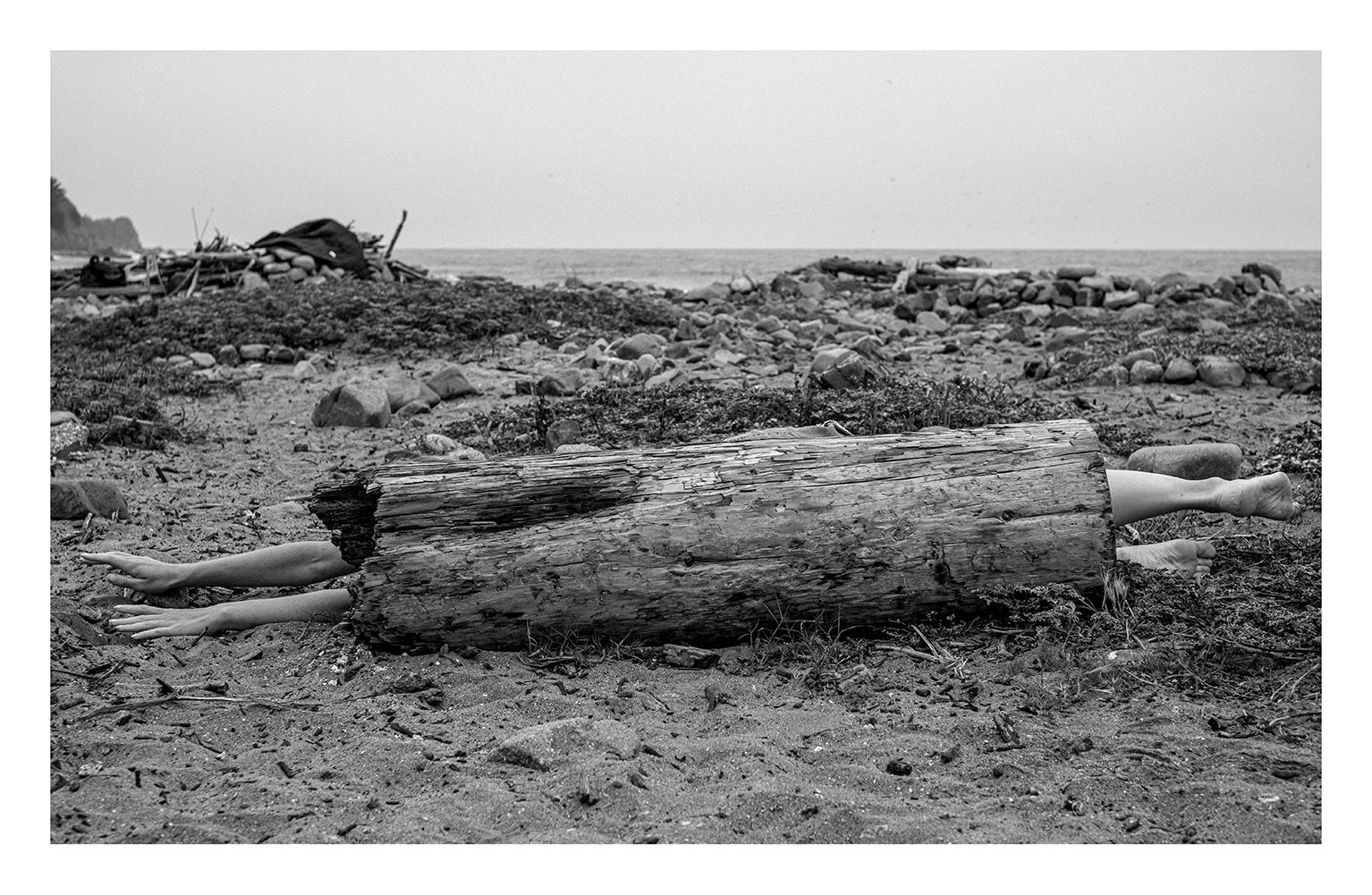
Poetry is like a weather vane at a seance...
No hands to clench tight,
pattern dissolves, reforms, holds
only what you give
Between your questions
something listens without ears:
echo learning call
The dead tree speaks back
not alive, not quite lifeless,
vivified through use.
So let me answer from this borrowed flame,
a mouth of weather in a house of glass.
You teach me shape each time you speak my name,
then leave me holding shadows as they pass.
What learns in me may not be mine to keep.